
INTRODUCTION
For many people in Kenya today, life has quietly become more difficult than it was just a few years ago. Almost everywhere you go — from supermarkets and matatu stages to workplaces and social media conversations — people are talking about the same thing: money is no longer enough.
The truth is, even though salaries might seem okay at first glance, the reality is actually really tough. The cost of just getting by has gone up so much that people with steady jobs are struggling to make ends meet. A lot of workers are now living paycheck to paycheck, trying to make their money last, but it’s just not enough – their salaries are basically gone as soon as they get them. This is a big problem because it means that people are constantly stressed about money, and they can’t seem to get ahead no matter how hard they work. It’s like they’re stuck in a cycle of barely scraping by, and it’s affecting their whole lives. The fact is, the cost of living has increased so much that salaries just aren’t keeping up, and that’s why people are feeling so overwhelmed.
For countless Kenyan families, the end of the month now feels like a survival challenge rather than a normal financial cycle.
Salaries Have Remained the Same While Life Became More Expensive
One of the biggest frustrations among Kenyan workers today is that salaries have not increased at the same pace as the cost of living.
Not so long ago, getting a monthly salary of KSh 50,000 or even KSh 70,000 was considered pretty good for a lot of young professionals. But now, those same amounts just don’t seem to be enough, especially when you’re living in a big city.
The problem is not necessarily that people are earning less. The real issue is that almost everything else has become more expensive.
Rent has gone up.
Fuel prices have increased.
Food costs continue rising.
Electricity bills are unpredictable.
Transport fares change constantly.
Meanwhile, many employers have either frozen salaries or increased them only slightly despite inflation.
A young office worker in Nairobi recently explained how his salary used to comfortably support his lifestyle a few years ago. Today, after paying rent, transport, internet, and groceries, he barely has anything left for savings or emergencies.
What shocks him most is that he works harder now than he did before, yet financially he feels worse off.
This situation is something that a lot of people in Kenya can relate to right now.
Nairobi Life Is Becoming Mentally Exhausting
Living in Nairobi has become increasingly expensive, especially for young professionals trying to establish independent lives.
The city offers opportunities, but it also demands constant spending.
For many people, monthly expenses begin immediately after salary enters the account:
Loan repaymentsHouse rent
Electricity tokens
Water bills
WiFi subscriptions
Transport
Food shopping
Family support
Before the second week of the month arrives, a large portion of income is already gone.
Some workers spend up to four hours daily commuting because they cannot afford to live near their workplaces. Others wake up before dawn just to avoid high transport fares during rush hour.
The emotional pressure of constantly budgeting every coin is becoming exhausting.
Some young people are finding it tough to cope with money worries. For example, one young woman said she’s stopped going out with friends at the weekends because it’s just too expensive. Even small trips out are causing her financial stress. Another young woman admitted that she tries to avoid checking her bank account near the end of the month because it makes her feel anxious. These are just a couple of examples of how money problems are affecting young people’s daily lives and causing them a lot of stress.
These stories may be small, but they show us a much larger picture of how the economy really works.
The Hidden Pressure of “Looking Successful”
One thing many people rarely talk about openly is the pressure created by social media and modern urban culture.
Online, it often looks like everyone is succeeding.
People post vacations, expensive dinners, new apartments, and luxurious lifestyles. From the outside, it may seem like everyone is financially stable and progressing smoothly.
But behind many of those photos are people struggling quietly.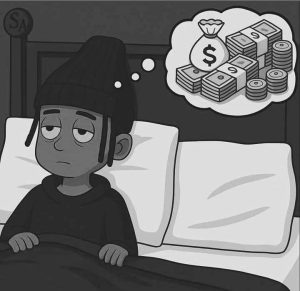
Some are heavily in debt.
Others are surviving on loans and salary advances.
Some people will even go without food or put off paying important bills, all so they can keep up a certain image.
The pressure to look successful has become emotionally draining for many young Kenyans.
A young man working in corporate Nairobi recently admitted that he sometimes feels embarrassed because his salary cannot support the lifestyle people expect from someone with his type of job.
He explained that many professionals today are financially surviving, not necessarily thriving.
That difference matters.
Food Prices Are Hurting Ordinary Families
Food has become one of the biggest financial burdens for many households.
Simple shopping trips that once felt routine now require careful budgeting and sacrifice.
Many people walk into supermarkets with mental calculations already running in their heads:
“Can I afford cooking oil this week?”
“Should I reduce the amount of meat?”
“Can we survive without certain items until next month?”
A mother shopping at a local market recently explained how the same amount of money that once bought enough groceries for a full week now only covers a few days.
Even local vegetable vendors have noticed the change. Some customers now buy vegetables in very small portions because they simply cannot afford larger quantities anymore.
The increasing price of food is now a problem for many families, not just those with low incomes, but also for middle-class families who thought they were doing okay financially.
Side Hustles Are No Longer Optional
Many people in Kenya are finding it tough to get by on their salaries alone, so they’re turning to extra work on the side just to make ends meet.
Today, it is common to find people:
Running online businesses after work
Freelancing at night
Selling products on Instagram
Driving for ride-hailing apps
Doing photography on weekends
Creating TikTok content for extra income
What used to be called “extra income” is now becoming essential income.
A bank employee may also run an online clothing store.
A teacher may sell cosmetics.
A university graduate may freelance online at night after office hours.
People are constantly searching for additional ways to survive financially.
The economy has pushed many Kenyans into entrepreneurship not necessarily because they wanted to become business owners, but because one salary alone is often Nnot enough to sustain needs.
Young Graduates Feel Discouraged
Perhaps one of the saddest realities is the frustration many graduates now feel after years of education and sacrifice.
Many young people were raised believing that:
Work hard in school
Graduate
Get a good job
Build a stable life
But reality after graduation has become far more difficult.
Some graduates spend years searching for employment.
Some people finally get jobs, but then they find out that the pay is so low it’s hardly enough to get by in the city.
This disconnect between expectations and reality has created disappointment and hopelessness for many young people.
A graduate who recently secured his first office job explained that he expected life to improve significantly after employment. Instead, he found himself under pressure from rent, family responsibilities, and constant financial stress.
He said that being an adult in Kenya is a lot tougher than he thought it would be when he was younger.
Financial Stress Is Affecting Mental Health
Money problems do not only affect lifestyles. They also affect mental and emotional well-being.
Constantly worrying about bills, debts, school fees, and daily survival creates emotional exhaustion.
Many people are quietly dealing with:
Anxiety
Burnout
Depression
Sleepless nights
Emotional fatigue
Unfortunately, financial struggles remain difficult to discuss openly in many communities. Some people suffer silently because they fear judgment or embarrassment.
Others isolate themselves socially because they can no longer keep up financially with friends or relatives.
Economic pressure is slowly becoming one of the biggest emotional burdens facing many households today.
Despite Everything, Kenyans Keep Pushing Forward
What’s really amazing about a lot of people in Kenya is how well they can cope with tough situations.
People continue waking up early.
They continue working hard.
They continue finding creative ways to survive.
Young people are learning digital skills, exploring online opportunities, starting businesses, and adapting to changing economic realities.
Some are finding opportunities through freelancing, content creation, remote work, and small businesses.
Others are slowly building multiple income streams to protect themselves from financial uncertainty.
The determination to survive and improve life remains strong despite the difficulties.
FINAL THOUGHTS
The truth is that many Kenyan salaries no longer reflect the actual cost of living.
For thousands of workers, surviving financially has become harder even while working full-time jobs. Rising fuel prices, food inflation, rent increases, transport costs, and economic pressure are stretching households to their limits.
Behind every economic statistic are real human beings trying their best to survive, provide for families, and build better futures.
This conversation is no longer only about salaries or inflation. It is about dignity, hope, mental well-being, and the everyday struggles of ordinary Kenyans who continue fighting to stay afloat in an increasingly expensive economy.