Jesus of Nazareth (1977): The Film That Defined Jesus for Millions — But How Much of It Is History?
Introduction
If you’re from Africa, Europe, Latin America, or some parts of Asia, you’ve probably watched *Jesus of Nazareth* at some point. This movie seems to have reached a lot of people around the world, and it’s likely that many have seen it at least once.
Maybe it was shown during Easter.
Maybe your parents watched it every year.
Maybe it was playing on television one afternoon and you sat down “just for a few minutes” only to find yourself watching for hours.
This movie was more than just a film for a lot of people – it was their first encounter with Jesus Christ, and it had a big impact on them.
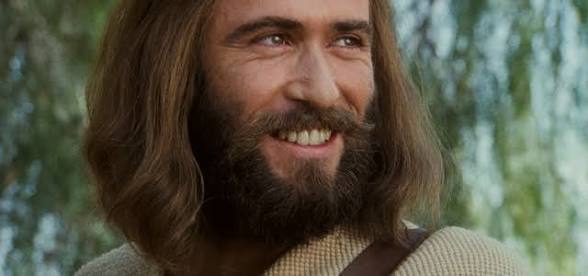
The picture of Jesus that people think of today – you know, the peaceful face, the long hair, the beard, the gentle voice, and those intense eyes – isn’t really based on what actually happened. It’s more like it came from a TV show that was on back in 1977.
That fact alone makes *Jesus of Nazareth* one of the most influential films ever made.
But a fascinating question remains:
How accurate is it?
Were the characters real people?
Who created the film?
And how much of what we see on screen is history, and how much is storytelling?
To really understand the answers to these questions, we have to look at the movie from different viewpoints – like history, culture, and filmmaking.
What Exactly Is Jesus of Nazareth?
The TV miniseries *Jesus of Nazareth* was released back in 1977. It’s a British-Italian production, directed by the well-known Franco Zeffirelli.
Unlike many biblical films that focus on spectacle and action, Zeffirelli’s production aimed to tell a detailed story about the life of Jesus from his birth to his death and the events that followed.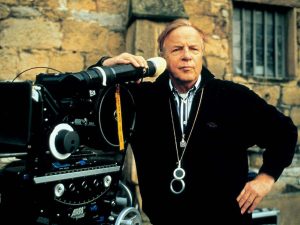
The project was enormous for its time.
Hundreds of actors participated.
Large outdoor sets were built.
Ancient villages were recreated.
Historical costumes were carefully designed.
The filmmakers wanted viewers to feel as though they had stepped into the first century.
The series was filmed primarily in Morocco and Tunisia because these locations resembled the landscapes of the ancient Middle East.
When it premiered, audiences were captivated.
It’s been almost fifty years, and yet people still can’t get enough of it – they’re still watching it to this day.
It’s not often that you see a show last that long, it’s a pretty big deal in the world of TV.
Who Was Franco Zeffirelli?
Every film reflects the vision of its creator.
Franco Zeffirelli was a director from Italy who really loved making movies that were beautiful to look at and also made people feel strong emotions.
He was not trying to produce a university lecture.
He was trying to tell a story that would move people emotionally.
This distinction is important.
Many viewers mistakenly assume that historical films are documentaries.
In reality, filmmakers must constantly make choices.
What should a character sound like?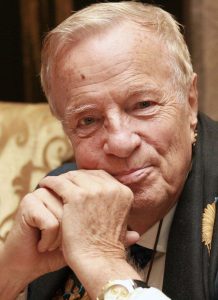
How should they behave?
What clothes should they wear?
What conversations might they have had?
Since nobody can travel back in time to verify these details, every historical film becomes a blend of research and imagination.
Zeffirelli’s goal was not necessarily to prove historical facts.
He wanted to make a world that felt real, so people watching could really imagine themselves in it.
The Man Who Became Jesus
The movie’s success can be attributed to a large extent to the excellent casting choice of Robert Powell in the role of Jesus, which really brought the character to life and added depth to the story.
You can spot him in pictures even if you don’t know much about Christianity – his face is that well-known.
His portrayal was calm, thoughtful, and almost mysterious.
Those bright blue eyes of his really stood out and became a defining characteristic of the whole show.
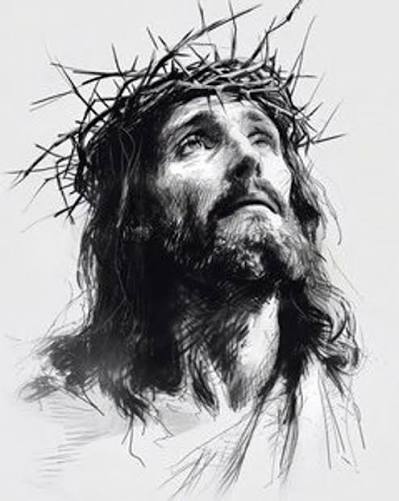
Interestingly, there is absolutely no evidence that the historical Jesus looked anything like Robert Powell.
In fact, nobody knows what Jesus actually looked like.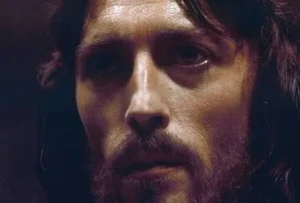
There are no surviving portraits from his lifetime.
There are no detailed descriptions of his appearance.
We don’t know what he looked like, because there’s no information about his height, eye color, or even his hairstyle or facial features.
This means every image of Jesus throughout history has been an artistic interpretation.
You know, the picture people have of *Jesus of Nazareth* has become really powerful, and now a lot of people think it’s actually true to history.
But the truth is, it’s just one way of looking at things, and there are many other perspectives out there.
Was Jesus a Real Historical Person?
This is probably the biggest question that the movie brings up.
The majority of historians today believe that Jesus was a real person who lived in first-century Judea.
This finding isn’t just based on what’s written in religious texts.
This idea is supported by looking at history and the fact that there were groups of people who followed his teachings from the very beginning.
However, agreeing that Jesus existed is not the same as agreeing about everything written about him.
History and religion often ask different questions.
A historian might ask:
“Did this person exist?”
A religious believer might ask:
“Who was this person spiritually?”
These are different discussions.
Many experts think that there was a real person who inspired the stories we know today.
What remains debated is how accurately later accounts describe his life and actions.
Understanding the Major Characters
The movie has a really realistic feel to it, and one of the main reasons for this is the way it brings in a whole bunch of characters, making it feel more like real life.
Let’s examine some of them individually.
MARY(Mother of Jesus)
In the film, Mary is portrayed as compassionate, thoughtful, and deeply devoted.
Most scholars think that Jesus probably had a mom named Mary, and this is because she is mentioned in some really old stories that were passed down.
Beyond that, however, certainty becomes difficult.
Many details associated with Mary come from religious traditions rather than independent historical evidence.
So, the movie’s portrayal of Mary shows not just what might have really happened, but also how people have thought about her over the years.
JOSEPH (Father of Jesus)
Joseph appears as a protective father figure.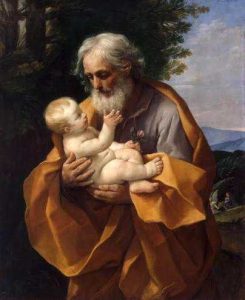
Like Mary, he is an important part of Christian tradition.
However, historians know very little about him.
There isn’t much to be found on the subject when you look beyond religious sources.
The character audiences see on screen is therefore partly based on tradition and partly on the filmmakers’ imagination.
JOHN THE BAPTIST
John the Baptist is one of the most interesting figures in the film.
 A lot of historians think that, unlike some other characters, he actually existed in real life. They believe he was a real person who lived in history.
Even scholars who disagree about Jesus often accept John’s existence.
He appears to have been a religious preacher who attracted followers and became influential during his lifetime.
So, when you see him in the movie, it’s actually based on more real history than you might think.
PONTIOUS PILATE
Pontius Pilate is one of the easiest characters to verify historically.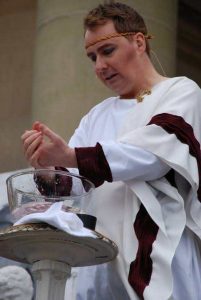
He was in charge of Judea, kind of like a governor, but for the Roman Empire.
We can see that he really lived, not just because of what’s written about him, but also because of things that have been found by archaeologists.
Pilate is different from many other people from ancient times because we have proof of his existence that isn’t just based on what people believed or passed down through religion.
This fact alone makes him a really important figure in the story, and it’s pretty clear that he actually existed.
HEROD
The film features rulers from the Herodian dynasty.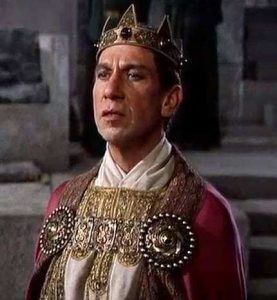
These leaders actually lived and played a part in shaping history, unlike some other characters who may or may not have existed.
We can see that history books have written down their actions, the friends they made, and the fights they were in.
Their inclusion helps anchor parts of the story within a verifiable historical setting
JUDAS ISCARIOT
Few characters are as controversial as Judas.
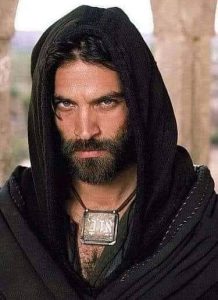 Traditionally remembered as the disciple who betrayed Jesus, Judas remains one of history’s most debated individuals.
Some people think that stories about him might have been changed or made more exciting over time.
Others accept the traditional account more fully.
The truth is that historians have limited information.
As a result, every portrayal of Judas involves interpretation.
The movie shows one side of a puzzle that experts are still talking about.
THE DISCIPLES
The disciples are often portrayed as a close-knit group following Jesus across the countryside.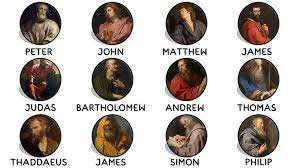
Many experts think that some of the people who followed Jesus were actually real disciples.
However, information about them varies greatly.
Some disciples are mentioned frequently in historical traditions.
Others appear only briefly.
This means that filmmakers often have considerable freedom when developing their personalities and relationships.
How Accurate Is the Film?
This is where things become complicated.
The film gets many broad historical details right.
The clothing generally reflects ancient styles.
The architecture resembles what historians know about the region.
The political tensions between local populations and Roman authorities are represented reasonably well.
However, no historical film can be perfectly accurate.
Dialogue must be invented.
Private conversations cannot be verified.
Emotions must be imagined.
Motivations must be interpreted.
As a result, viewers should think of *Jesus of Nazareth* as a historical drama rather than a documentary.
It’s not about copying the past perfectly, but rather bringing it back to life in a way that captures its essence and spirit.
-Why Did the Film Become So Influential?
Thousands of movies have been released since 1977.
Most have been forgotten.
Why did this one survive?
Partly because it arrived at the right moment.
Television was becoming a powerful force in households around the world.
Families often watched programs together.
Religious stories already had enormous cultural significance.
The film combined familiar stories with high production quality.
It gave people pictures to go with the stories they had only read or heard about before, making it feel more real.
The movie created a lasting impression on people’s minds, giving them a vivid image of what the world was like in biblical times.
Did the Film Change How People See Jesus?
In many ways, yes.
Whether someone is religious or not, visual media has enormous influence on memory.
When people repeatedly see the same image, they begin associating it with reality.
As time went on, Robert Powell’s depiction of Jesus became really influential, and a lot of people started to think of it as what Jesus actually looked like, without even realizing it.
This demonstrates the power of cinema.
Films do not simply entertain us.
They shape how we remember history.
They influence how we imagine people we have never met.
Sometimes they become more influential than historical evidence itself.
The Bigger Question
What really matters when we think about the stories of Jesus is not whether every single detail is exactly as it happened.
Perhaps the more interesting question is why humanity remains fascinated by these stories after two thousand years.
The movie still grabs people’s attention today, and that’s because it deals with issues that are always relevant, you know, the kind of things that never really go away.
Faith.
Doubt.
Power.
Justice.
Sacrifice.
Hope.
Whether one approaches the story as history, religion, philosophy, or literature, these themes continue to resonate.
That could be why the movie still matters today.
Conclusion
Nearly half a century after its release, *Jesus of Nazareth* remains one of the most influential television productions ever created.
It introduced millions of people to some of history’s most famous characters, including Jesus, Mary, Joseph, John the Baptist, Judas, Pontius Pilate, and the disciples.
Some of these figures are strongly supported by historical evidence.
Others remain difficult to verify.
Many exist in the fascinating space where history, tradition, and storytelling overlap.
The film does not provide all the answers.
It actually brings up more questions than it provides answers.
Maybe that’s what makes it so timeless and interesting to people.
It encourages viewers to think about the past, question what they know, and explore one of humanity’s most influential stories with curiosity and an open mind.
Whether viewed as history, religion, cinema, or culture, *Jesus of Nazareth* remains a remarkable reminder of how powerful stories can be—and how they continue shaping the way we see the world.